
Eco Travel: How to Explore the World Sustainably (2026 Trend)
The world is shifting, and 2026 might just be the year eco-conscious travel finally becomes the norm we’ve all been waiting for. More people than ever are choosing to explore this planet responsibly, keeping the momentum alive and turning sustainable exploration into a genuine trend. Whether you’re a seasoned pro or someone just beginning to pack a more mindful eco suitcase, there’s always something new to add to your growing set of habits. The beauty of this shift is that it doesn’t demand perfection — it simply asks for awareness.
Having spent years refining our own travel footprints, the most meaningful trips weren’t the ones packed with the most destinations — they were the ones taken most consciously. As global citizens, every smart choice we make — from booking our transport and accommodation to supporting local businesses — contributes to protecting the environmental footprint we leave behind. In an era of heightened sustainability awareness, weaving these values into the very fabric of how we move — from metropolises to remote landscapes — is no longer optional. The paradigm shift from tourist to mindful traveler recognizes that environmental preservation, social responsibility, and economic vitality are fundamental and deeply interwoven — this is the transformative approach to conscientious exploration our planet needs.

How to Plan Trips with Sustainability in Mind
Planning a trip with sustainability at the center starts long before you pack a bag. The most informed travelers know that vacation planning choices carry the greatest weight — are locals welcoming tourists, or are they recovering from over-tourism or natural disasters? Are your bookings straining local infrastructure? Understanding that animals are not props for photo ops or feeding sessions, and that captivity-based encounters are inherently unethical and harming, is equally critical — no matter how convincing the marketing might be. Do your research, listen to locals, and plan your eco-friendly holiday accordingly.
Choose transportation that reduces emissions from the start — trains, buses, or hybrid vehicles over domestic flights. If flying is unavoidable, book direct routes and fly economy class. For accommodations, go eco-certified: properties prioritizing energy efficiency, water conservation, and waste reduction protect natural resources while promoting responsible tourism. Watch for greenwashing — true sustainable stays communicate their certifications clearly, backed by customer reviews and regulators like Green Key or Earth Check, with genuine green room and linen laundering initiatives rather than surface-level gestures.
Only support wildlife encounters that lead with animal welfare — avoid elephant rides, captive dolphin shows, and anything exploitative. Arrive having learned about local customs, traditions, and etiquette; respect sacred sites and communities. Pack a reusable water bottle, coffee cup, and utensils; keep luggage light to reduce fuel consumption. Use apps, platforms, and digital solutions powered by technology to make smart choices — from carbon footprint calculators to finding energy-efficient stays. For unavoidable carbon impact, invest in credible carbon offset programs funding renewable energy and reforestation, like Wilderness International, to keep your journey genuinely carbon neutral and aligned with cultural sensitivities.
Slow Down Your Travel Plans
There’s a quiet revolution in how thoughtful travelers move through the world — and it starts with slowing down. Eco-conscious travel isn’t about cramming bucket lists or chasing country counts; it’s about arriving somewhere with genuine intentions rather than content for the algorithm. The trips where we stayed longer, moved less, and asked more questions gave us far richer stories than any rushed itinerary. Mindful travel builds meaningful connections that no hurried schedule can replicate — and it begins with reframing your mindset to truly acknowledge the privilege that travel represents.
Fewer stops mean fewer emissions, and longer stays in a single destination allow for real immersion in local culture. In our fast-paced world, vacations often mirror the hectic energy we’re escaping — a slower pace is both the antidote and the more responsible choice. Research your intentions before you research the internet, show genuine respect for every place you visit, and let curiosity — not country counts — guide the way.
Supporting Local Communities
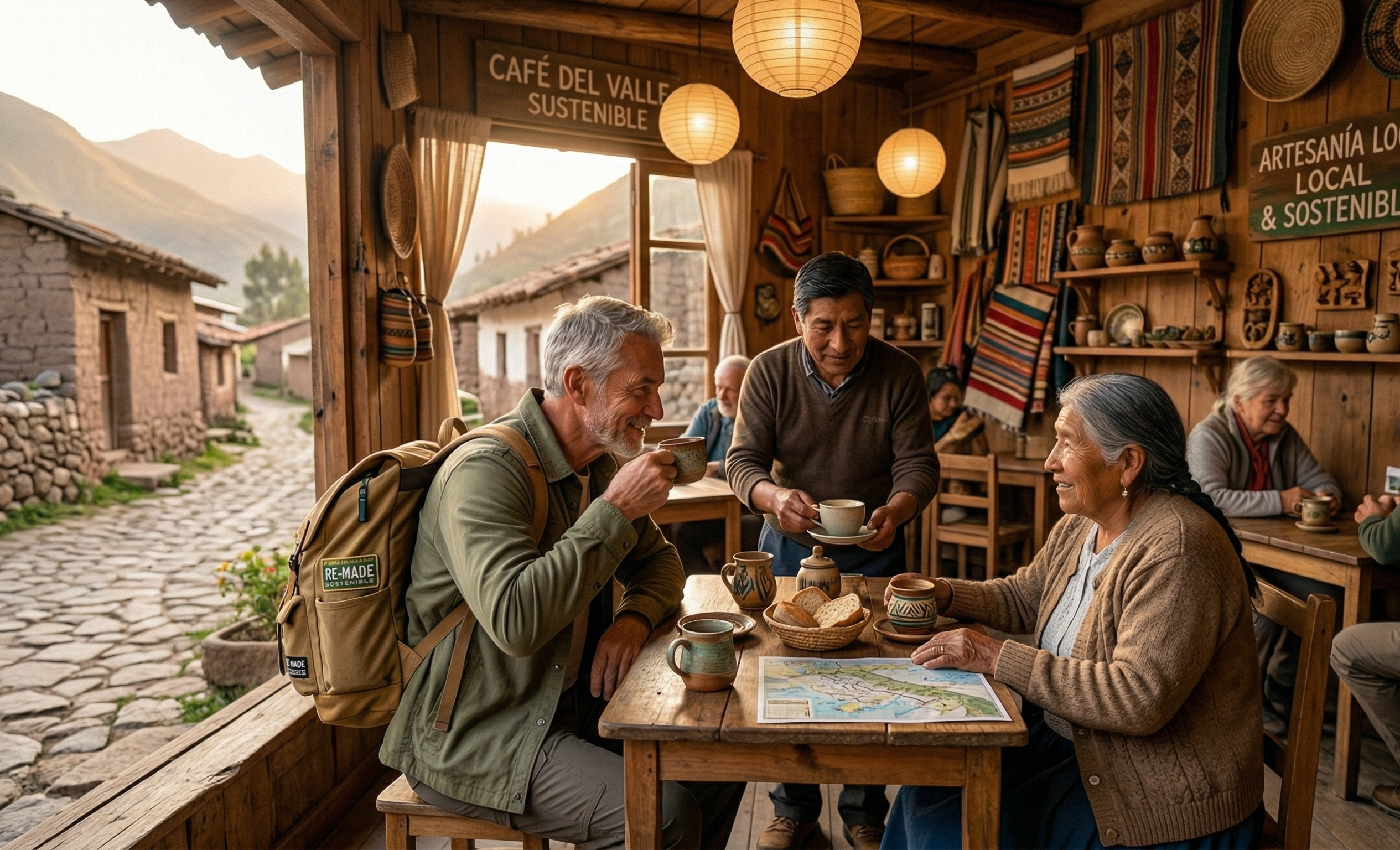
Every meal at a locally run restaurant, every night at a family-owned bed and breakfast or homestay, every tour booked through a local guide — these choices keep money within the community rather than sending it offshore to international conglomerates. Local establishments are almost always more environmentally friendly, sourcing ingredients from nearby farms and vendors so the food is fresher and carries a smaller carbon footprint than imported products. Use platforms like booking.com or Airbnb to discover options, but always book direct — avoiding standalone properties owned by investors that drive up housing prices and shrink the rental market.
Some of our most memorable moments came from local shop owners and homestay hosts who pointed us away from tourist traps toward hidden gems no blog could surface. Seek out walking tours and experiences run by locals — they are more insightful, more connected, and better aligned with genuine community engagement. Choose authentic experiences that empower local artisans and entrepreneurs, engage with cultural heritage, and resist big-brand convenience. The ripple effect of spending locally drives sustainable development, strengthens the local economy, preserves traditions, rights, and the economic impact that makes each destination unique — because as Dr. Becker notes, too many leisure travelers let price and location override sustainable practices, and that gap is where the greatest damage quietly accumulates.
Pack Light and Smart
Every unnecessary kilogram added to a plane or vehicle increases fuel consumption, adds to carbon emissions, and compounds your environmental impact. Pare back your clothes, cut your shoes by one pair, leave excess toiletries and jewellery behind, and wear that outfit twice — your luggage weight will thank you. We started doing a post-trip audit of everything we didn’t touch, and our packing got dramatically lighter within two trips.
Traveling lighter also means choosing reusable essentials — a water bottle, coffee cup, and utensils — over disposables, and opting for versatile clothing across multiple settings. Whether moving by train, cycling, or on foot, the lighter your travel load, the smaller your real carbon footprint — and the more freely you move through the world with a genuinely sustainable transportation mindset.
Offset Your Carbon Footprint
Carbon offsetting has its place in sustainable travel — but treat it as the finishing garnish, not the main course. Always research the right program rather than defaulting to what your airlines offer at checkout — not all carbon offset programs are equal. The best ones are rooted in your country of residence or the country you’re visiting. We support Carbon Positive Australia, which plants native trees to restore landscapes to their natural habitat, funds community planting, and protects native animal species — with a platform that lets you calculate carbon emissions directly or choose pre-calculated options.
For international travel, Wilderness International and the Sustainable Travel carbon footprint calculator offer credible, carbon neutral pathways. Investing in renewable energy, reforestation, and sustainable development through verified programs is a proactive step that turns unavoidable environmental impact into a genuine contribution toward climate action.
Reduce Plastic Waste
The most effective eco habits are the small, consistent ones carried from home into your travels. Bring reusables: keep cups, water bottles, and chopsticks so you can decline single use cutlery at markets. In your room, turn off lights, dial back air conditioning, and shut the tap while brushing your teeth or washing your hair — the same choices you make at home, applied somewhere new. In high-tourism areas, thousands of travelers ignoring these basics cause real, measurable water waste and energy waste.
Beyond your room, carry a reusable water bottle, foldable shopping bag, and refillable toiletry containers. Say no to single-use plastics — straws, disposable utensils, excess packaging — especially near coasts where they directly threaten marine life and fragile ecosystems. Take shorter showers, reuse towels and linens, keep your eco mindset and curiosity alive, and pick up that piece of rubbish on the trail. Small actions, repeated consistently, are the real foundation of carbon footprint reduction.
Adventures Close to Home Are Still Adventures!
There’s a version of eco-conscious travel that doesn’t require a passport — and it’s one of the most powerful tools for keeping your carbon footprint low. We’ve committed to staying within Australia this year, skipping flights entirely, and discovering the depth of a country we’ve called home for most of our lives. Years of van-lifing across Aotearoa New Zealand taught us that the familiar often hides the most extraordinary adventure — the allure of distant cultures is real, but so is the richness waiting in your own backyard.
Traveling close to home slashes your budget, reduces carbon from flights, and reframes the way you see places long taken for granted. You don’t need country counts or stamps in a passport — just movement, imagination, and a willingness to look at the ordinary world through fresh eyes.

Take Home Memories, Not Plastic
Walk into any tourist shop and you’ll find the same wall of keychains, magnets, shot glasses, t-shirts, and mugs — mass-produced far from the souvenir rack, destined for a shelf or bin within months. The tacky souvenir industry thrives, but it’s an eco-friendly failure: money bypasses the local community, goods come from overseas conglomerates, and cheap materials harm the environment at every stage.
The better path is heading toward a market, a local indie bookshop, or a craft stall selling handmade products by locals — a hand made serving bowl, a woven scarf or hat, a book by a local author, locally made edible treats, or meaningful artwork. These choices support the local economy and travel home with a story. Better still, fill a junk journal with photos and mementos — always verify that what you buy was locally made and sold by a locally owned shop.
Make It Sustainable For You
Sustainable travel only sticks when it fits the way you like to explore. If hiking doesn’t excite you, don’t pad your itinerary with it. Take the adventures that light you up and find eco-friendly trips that serve them — love cities? Connect five via a train line instead of flights. Drawn to wildlife? Choose tours run by locals who guide you toward animals living freely, never in captivity or exploited for a photo.
The goal isn’t to shrink your adventure — it’s to sharpen it. Skip taxis and Ubers, explore on foot, and let understanding grow with every trip. Every style of travel has a greener version, and respect for the planet and local people makes almost any journey more responsible and far more rewarding.
A Global Perspective of Sustainability in Travel & Tourism
Over the past 30 to 40 years, improved transportation has made the globe far more accessible, sending tourism surging toward both iconic and off-the-beaten-path destinations — and straining their cultural and environmental integrity in the process. Joseph Scarcelli of York College of Pennsylvania‘s Hospitality and Tourism Management program notes that while this travel industry evolution is remarkable, many destinations now struggle to keep up. From capping tourist numbers at Machu Picchu to leveraging technology for sustainable travel planning, the shift toward responsible tourism and mindful exploration proves that sustainability is both ethical and commercially smart.
The COVID-19 pandemic acted as a global reset — ecosystems recovered, and Venice saw its canals run clear during lockdowns, revealing what genuine sustainable tourist experiences could look like. Daily visitor fees now manage influx and fund local maintenance. Meanwhile, Frederick Becker highlights how Marriott and Hilton have adopted a triple-bottom line — people, profits, planet — proving financial success and environmental and cultural responsibility are inseparable. The triple multiplier effect of sustainable tourism strengthens local economies, preserves cultural traditions, and safeguards natural heritage — making it smart business, not just good ethics.
Eco-Friendly Tourism — What It Is & Why It Matters
Eco-friendly tourism — synonymous with sustainable tourism — is a conscious, intentional approach to travel that minimizes environmental impact, honors local cultures, and contributes to the well-being of communities. As Dr. Becker explains, it targets the smallest possible carbon footprint, keeping focus on people and planet. It means making choices across transportation, accommodation, activities, and products that reflect conservation, sustainable resource use, and ethical engagement.
When you show up as a steward — culturally sensitive, avoiding disruptive or disrespectful behavior, and supporting conservation — the benefits compound. Local businesses thrive, cultural enriching experiences are preserved, carbon footprints shrink through responsible waste management, natural habitats are protected, and biodiversity flourishes even in areas most vulnerable to climate change and over-tourism. A genuinely sustainable model doesn’t just protect — it heals.
Challenges and Barriers to Sustainable Travel
Limited awareness drives most unsustainable practices — travelers cause environmental and cultural impact not from indifference but from simply not knowing. The misconception that eco-friendly accommodations and responsible tourism are expensive deters many, yet affordability improves as demand grows. Inconsistent standards and absent standardized criteria make identifying genuinely eco-friendly businesses difficult, while resistance to changing habits for convenience keeps many stuck. Education and awareness campaigns, financial incentives from governments and organizations, clear certification programs for transparency, and collaborative initiatives with non-profits are steadily closing these gaps.
Real-world models prove it works: Costa Rica built national identity around eco-friendly accommodations, wildlife conservation, and community engagement, driving biodiversity gains and strong economic outcomes. Airbnb‘s Green Hosting Program nudges hosts toward better water and energy habits. Hotels embracing the circular economy — repurposing materials, cutting waste, sourcing locally — prove cultural authenticity and sustainability reinforce each other. And community-led tourism built on homestays and local tours quietly redefines travel well, preserving cultural heritage while returning real power to local people.

Understanding Your Role as a Sustainable Traveler
Sustainable travel is ultimately a personal commitment — a philosophy of exploration that goes beyond checklists. Every decision on the road holds power to contribute to preserving the planet‘s treasures and cultures, or quietly eroding them. You don’t become a steward of your destinations overnight, but each trip taken with greater mindful awareness and genuine engagement with local communities moves the needle. The fragile ecosystems and living cultural heritage of the places we love depend on travelers choosing to show up differently.
When travelers consistently choose accommodations built on sustainability, select responsible transportation, and engage with communities in ways that honor human traditions and natural wonders, the cumulative effect is transformative. We become ambassadors for a more harmonious and sustainable future — architects of a collective responsibility that values depth, dignity, and long-term flourishing over short-term spectacle.