
Luxury Travel in 2026: Top Premium Destinations for Elite Travelers
Having spent years navigating the world’s most coveted addresses — from sun-soaked private atolls to mist-wrapped alpine resorts — I can say with complete confidence that luxury travel in 2026 has fundamentally shifted its identity. Today’s most discerning travelers are chasing something far more layered: exclusivity wrapped in emotional richness, comfort elevated by personal meaning, and unforgettable experiences that leave an imprint long after the luggage is unpacked. From personalized services and world-class dining to seamless journeys with every detail curated by expert hands, the modern high-end traveler demands both privacy and authenticity in equal measure.
What makes 2026 particularly exciting is how rapidly luxury is being redefined. The World Luxury Chamber of Commerce (WLCC) — a powerhouse global network of the world’s most influential industry leaders — confirms what seasoned travelers already sense: the shift from material excess toward emotional richness and personal transformation is accelerating. Premium hospitality is no longer about champagne service alone — it is about meaningful connection, self-exploration, renewal, and purpose-driven travel rooted in intention and bespoke experience. Whether it’s overwater villas above tropical islands, heritage palaces converted into iconic properties, or off-the-beaten-path adventures deep in remote wilderness, elite travelers, UNHWIs, and passionate explorers are all seeking journeys built on neo-nomad freedom, gastronomic exploration, holistic wellness, solo female travel, exclusive access, and cultural resonance.
Maldives
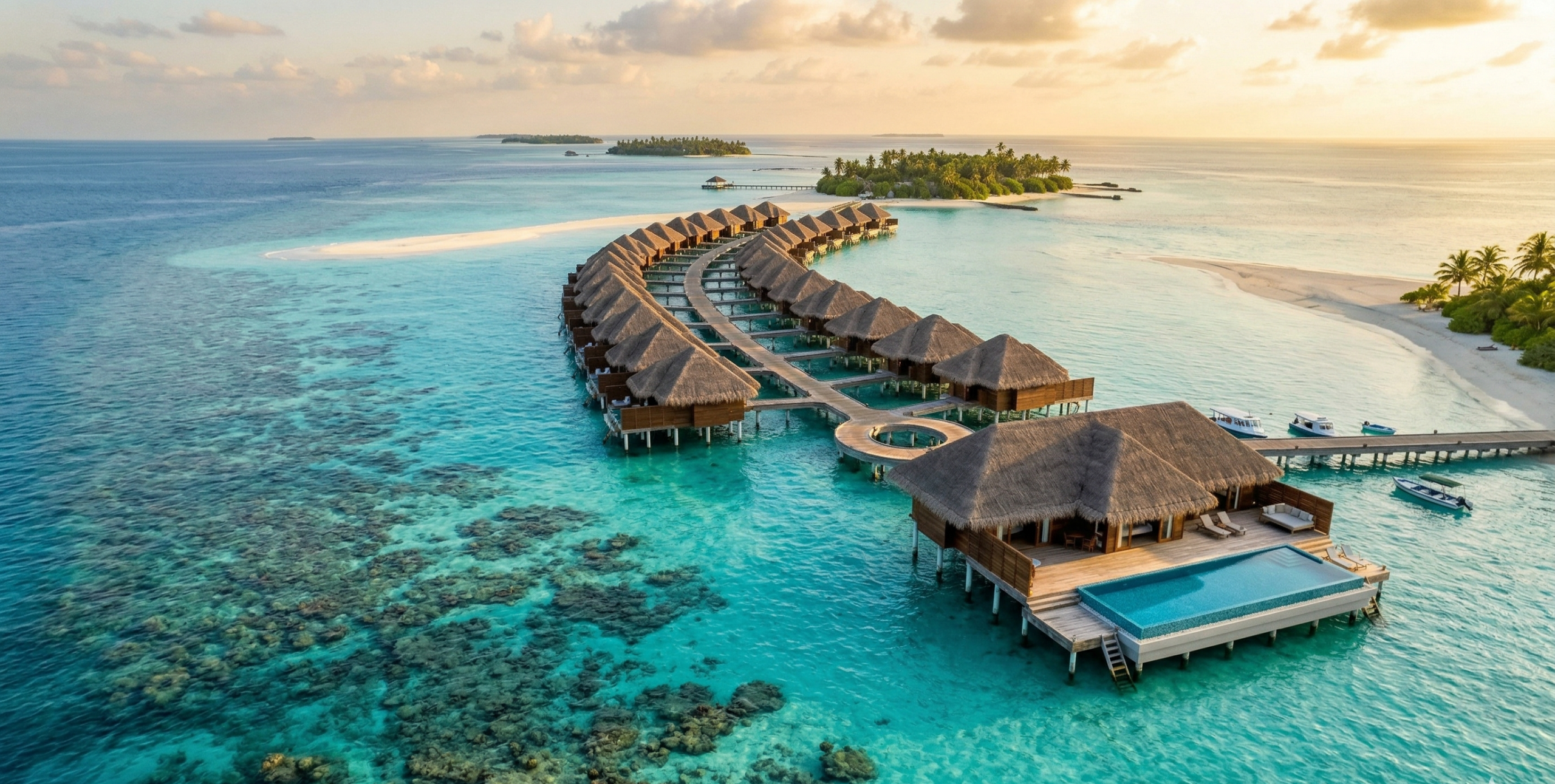
There is a reason the Maldives keeps pulling travelers back — and having returned multiple times myself, I understand that pull completely. This ultimate luxury island destination is defined by its luminous lagoons, overwater architecture, crystal-clear waters, and personalized services that border on the telepathic. For honeymooners and those craving barefoot luxury and castaway escapism, waking inside a villa with glass floors hovering above a blue lagoon is genuinely unlike anything else on earth. The finest stays deliver floating breakfast at sunrise, personal butler service, fine dining with ocean views, and evenings spent stargazing from private decks.
In 2026, two resorts define refined indulgence in harmony with nature. Soneva Jani brings imaginative design to life through overwater villas with retractable roofs and private slides into the lagoon, where experiential dining turns every meal into a story rooted in sustainability and privacy. The Waldorf Astoria Maldives Ithaafushi delivers a polished, contemporary vision across a sprawling private island — impeccably designed villas, diverse dining concepts, and precision in consistency that sets a new benchmark. Visiting between November and April during peak season offers dry, sunny skies perfect for snorkeling, scuba diving, kayaking, sunset cruises, and spa treatments — or take a private yacht cruise to an uninhabited island where a chef prepares a candle-lit beach dinner beneath the stars, a bespoke, once-in-a-lifetime definition of opulence. Indian travelers enjoy visa on arrival for 30 days (extendable to 90), with a per-person budget of ₹1,90,000 for a 3–4 day trip.
Bali, Indonesia
Few places carry the layered soul of Bali — an island where temples, waterfalls, rice terraces, art-filled towns, black-sand beaches, and volcanic landscapes coexist with warm hospitality and a spiritual culture that quietly transforms every visitor. Ubud delivers absolute greenery and calm, while Seminyak and Uluwatu offer golden sunsets, modern cafes, and access to Bali’s most refined luxury stays. For summer travelers, the Island of the Gods delivers romance and peaceful landscapes unlike anywhere in Southeast Asia, with private pool villas from ₹12,000+, mid-range options at ₹5,000–₹8,000, and budget stays from ₹2,000 per night.
The most refined and diverse side of Bali reveals itself through a multi-stop journey across iconic properties. COMO Shambhala Estate in the Ubud jungle is the gold standard of holistic living, mindfulness, and nature-driven healing. Buahan, a Banyan Tree Escape pushes further with its no walls, no doors concept — radical openness, immersive nature, and profound seclusion. Soori Bali delivers minimalist elegance against the drama of the west coast, Alila Villas Uluwatu benchmarks sustainable clifftop luxury, and Potato Head Suites in Seminyak celebrates design, culture, and sustainability in one of the island’s most creative hospitality experiences. Bali is exceptionally veg-friendly — plant-based restaurants, Indian restaurants across Kuta and Seminyak, vegetarian and Jain meals, smoothie bowls, Indonesian dishes, and rooftop restaurants across Ubud complete the picture.
Japan
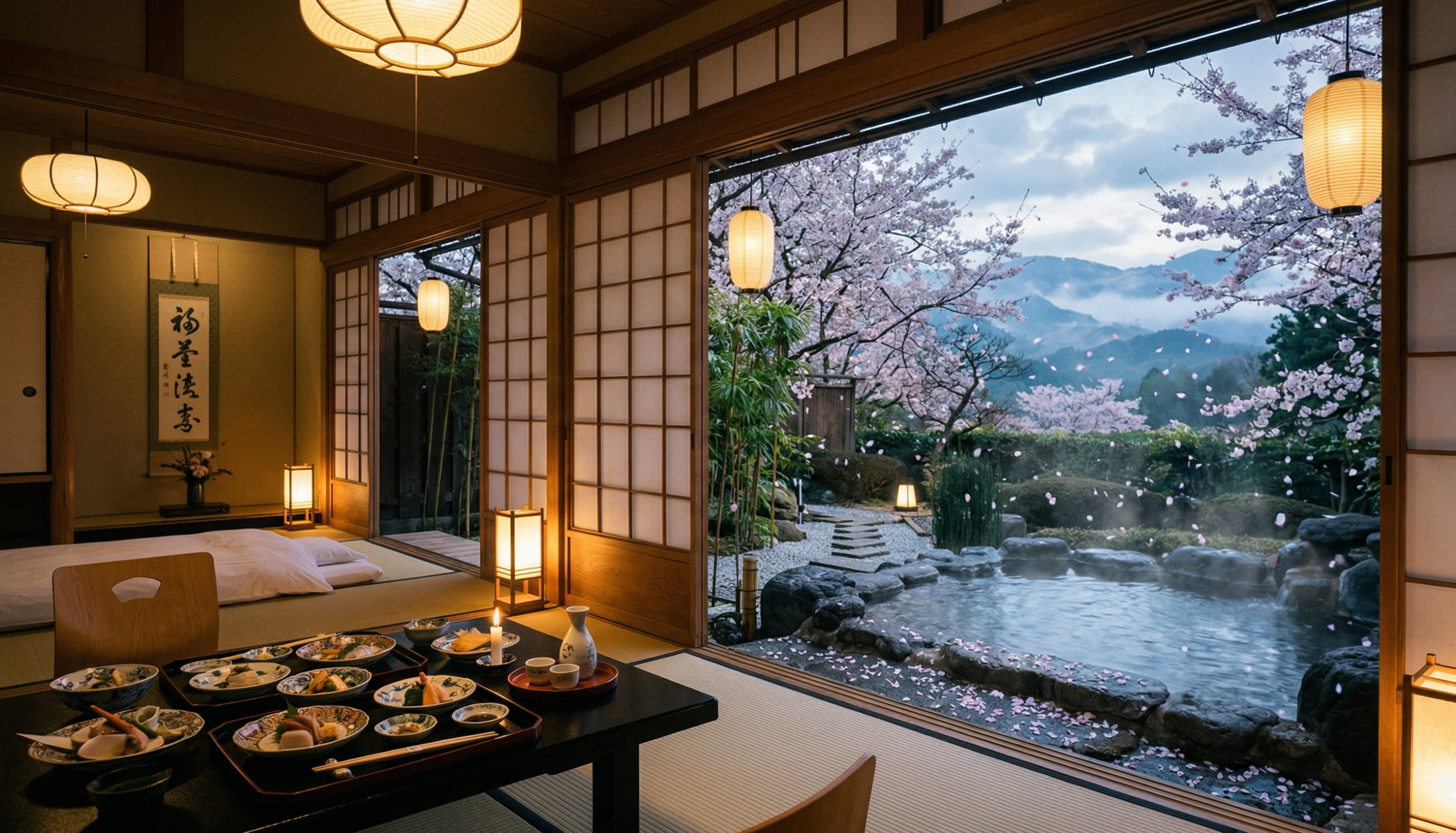
Japan is one of those rare destinations where precision, elegance, and tradition coexist with modern luxury in a way that feels completely effortless. The country’s finest experiences unfold across high-end hotels, luxury ryokans, Michelin-star dining, and deeply cultural experiences — from tea ceremonies with master artisans to private garden walks that slow time to a crawl. The best seasons are March to May during spring, when cherry blossoms transform cities into something dreamlike, and September to November in autumn, when fall foliage paints the landscape in fire — with mild, pleasant weather making every outdoor moment across Tokyo, Kyoto, and Hokkaido exceptional.
A luxury ryokan stay in Hakone or Kyoto — featuring private open-air onsens, kaiseki tasting menus by Michelin-level chefs, and immersive tea ceremonies — is a once-in-a-lifetime refined cultural experience. Romantic memories are built across ryokan stays, cherry blossom strolls, Kaiseki dining, sake, wagyu, sushi, and omakase experiences that are as much philosophy as food. Adventures extend to skiing in Hokkaido, mountain hikes, and Shinkansen bullet train rides threading between temples, shrines, and vibrant neighborhoods. Indian travelers require an e-visa via VFS Global processed in 3–5 working days for up to 90 days, with fees around INR 450, and a per-person budget of approximately ₹1,90,000 for a 7–8 day trip.
Switzerland
There is an almost unfair perfection to Switzerland — a country where precision feels like a birthright and scenic beauty arrives in every direction without warning. Premium train journeys like the Glacier Express Excellence Class cut through the Swiss Alps with panoramic windows, champagne service, and gourmet multi-course dining on board. Wine tasting in the Lavaux vineyards, fine dining with panoramic mountain views, luxury chalet stays, and iconic photography at the Matterhorn form the building blocks of a refined, elegant Swiss escape — best experienced June to September for summer hiking and lake cruises, or December to February for world-class skiing and snowboarding across alpine towns.
The Bürgenstock Resort perched dramatically above Lake Lucerne — sweeping Alps views, world-class wellness, and exceptional dining — is among Europe’s most compelling luxury addresses in 2026. The Waldorf Astoria Amsterdam brings 17th-century palaces back to life along historic canals, pairing meticulously restored architecture with understated contemporary elegance and polished service honoring the Dutch Golden Age. Indian travelers need a Schengen visa — 90 days via VFS Global with valid passport, confirmed flights, travel insurance, bank statements, and ITRs — with a per-person budget of ₹2,20,000 for a beautifully planned 6–7 day trip across Interlaken, Zermatt, Geneva, Lake Lucerne, the Chapel Bridge, and the landscapes beneath the Jungfrau.
Seychelles
The Seychelles operates at a frequency entirely its own — untouched natural beauty, secluded beaches, turquoise waters, and exclusivity so complete that the word “unspoiled” feels inadequate. Granite islands rise from the Indian Ocean, endemic species call from lush rainforests, and sea turtles glide through coral reefs just meters from shore. The Aldabra Atoll — a UNESCO treasure — and the extraordinary Morne Seychellois nature walks represent biodiversity and marine park experiences that transform a holiday into something genuinely meaningful. Visit between April and November for calm seas, pleasant weather, and outstanding snorkeling and diving visibility.
For the truly elite traveler, the Seychelles offers a private island takeover — exclusive access to villas, beaches, chefs, and staff — creating a world entirely your own. Days unfold with helicopter island hopping, encounters with rare birds like the coconut de mer, spa pavilions overlooking the ocean, sunset cruises, private island picnics, luxury spa retreats, and fine dining with unobstructed ocean views. Indian travelers need a Travel Authorization (TA) and Visitor’s Permit on arrival via the Seychelles Electronic Border System (govtas.com) or E-Border app, with health insurance and proof of funds required for up to 3 months — and a per-person budget of ₹2,30,000 for a 5–6 day journey of serene relaxation and romantic indulgence.
Thailand
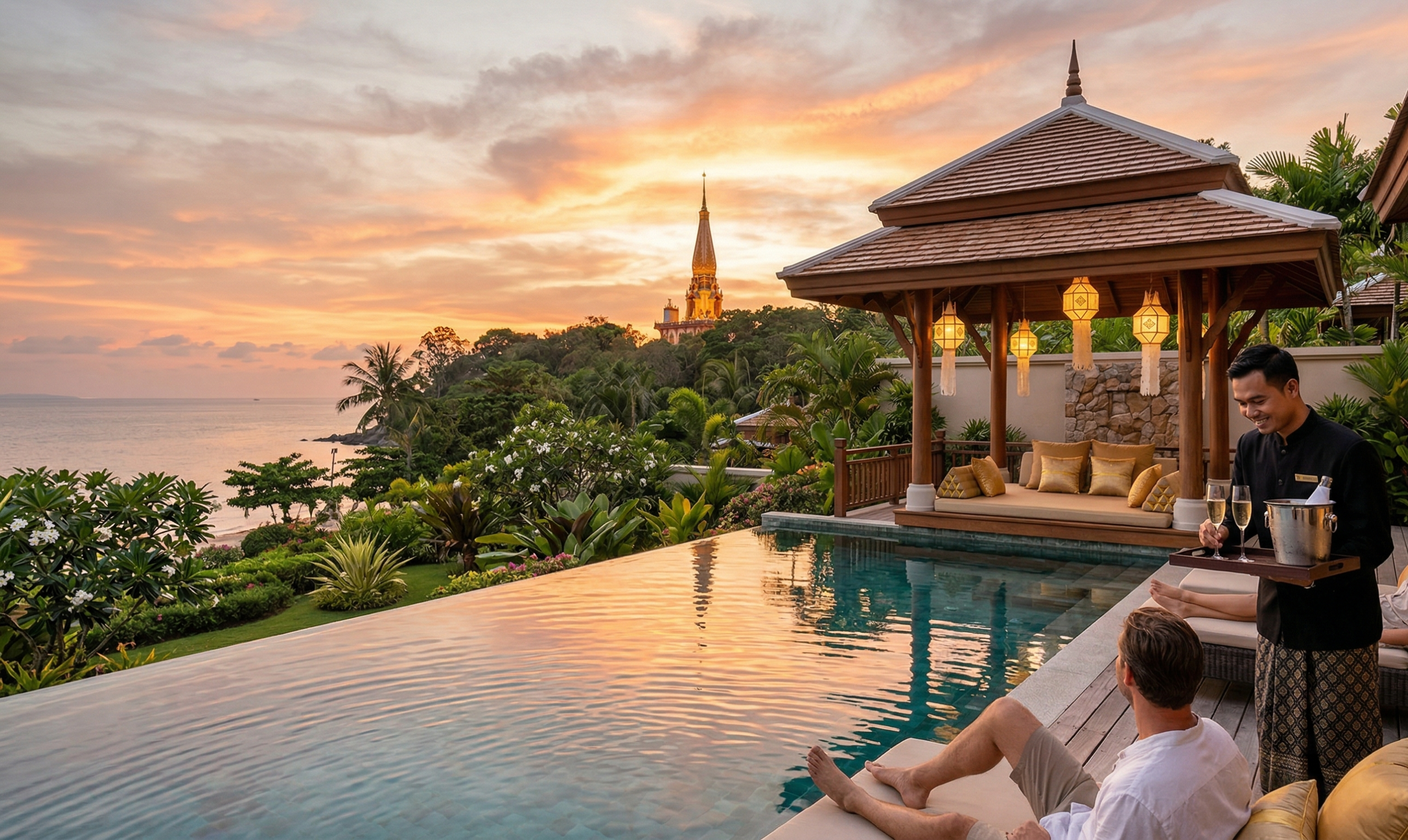
Thailand manages to be everything at once — culturally electric, naturally spectacular, spiritually grounding, and capable of delivering world-class luxury resorts and wellness retreats that rival anything globally. Private pool villas in Phuket, luxury riverfront stays in Bangkok, cooking classes beside local markets, spa retreats in Chiang Mai, and the legendary Grand Palace, Wat Pho, and Phi Phi Islands create a travel palette rich enough for any elite appetite. The ideal window is November to February — cooler, drier conditions making beaches, sightseeing, cultural exploration, island-hopping tours, and jungle treks genuinely effortless.
The once-in-a-lifetime highlight is a deep-immersion wellness retreat in Chiang Mai — personalized detox programs, private yoga sessions, traditional healing therapies, organic farm-to-table meals, forest meditations, and hot spring rituals blending culture, wellness, and opulence into something transformative. Sunset cruises, fine Thai dining, elephant sanctuaries, floating markets, Muay Thai, and the electric energy of Krabi round out an itinerary that rewards at every turn — navigated by longtail boats, tuk-tuks, and ayurvedic healing traditions woven through every region. Indian travelers enjoy visa-free entry for 60 days via the Thailand Digital Arrival Card (TDAC) — completed online within 72 hours of arrival — with a per-person budget of ₹1,90,000 for a 7–9 day trip.
UAE (United Arab Emirates)
The UAE wears luxury like a second skin — where modernity and desert grandeur collide spectacularly, and the iconic skyline of Dubai and the cultural landmarks of Abu Dhabi offer two equally compelling expressions of opulence. World-class resorts, beachfront properties along Palm Jumeirah, desert safaris with private dinners, helicopter tours over Dubai, yacht cruises along the Arabian Gulf, and sky-high dining at the Burj Khalifa form the backbone of a UAE luxury itinerary — while visits to mosques, forts, and gold souks ground the experience in Arabian culture and falconry traditions.
The once-in-a-lifetime experience is the private desert dinner following a sunset camel safari — lantern-lit dunes, live oud music, seven-course gourmet meals beneath the stars, stargazing through telescopes, and luxury tented suites with personal attendants anticipating every need. Between November and March, the pleasant climate opens the city for desert safaris, beach relaxation, city tours, and outdoor experiences, while DIFC, world-class malls, and the Burj Al Arab remain indulgent year-round. Indian travelers access e-visas for 30 or 60 days (single or multi-entry), with a valid passport of 6 months validity, and a per-person luxury budget of ₹2,10,000–₹2,50,000 for a 5–6 day itinerary filled with Formula 1, desert dunes, and Arabian nights.
New Zealand
New Zealand stops you mid-sentence — where landscape arrives so dramatically that conversation simply becomes impossible. This is a country built for exclusive, nature-focused luxury travel — alpine mountains, scenic coastlines, sweeping wine regions, luxury lodges, and the specific stillness that only New Zealand’s wilderness can produce. The November to April window offers the most pleasant conditions for scenic drives, road trips, outdoor activities, lake sightseeing, and fjord cruises, with colorful landscapes fully accessible and adventure available at every altitude.
The once-in-a-lifetime experience is the private helicopter ride over Milford Sound — soaring through dramatic fjords, past glaciers and waterfalls, landing on a remote peak for a gourmet picnic on an alpine ridge that redefines exclusivity. Beyond that singular moment, New Zealand rewards with bungee jumping in Queenstown, glacier tours, wine tasting in Marlborough’s sauvignon blanc vineyards, glowworm encounters in Waitomo Caves, and deeply moving Maori culture experiences — threaded through nights in luxury lodges with fine dining and panoramic views. Indian travelers apply for a Visitor Visa (up to 9 months) through Immigration New Zealand or VFS Global, with bank statements, ITRs, return tickets, and a detailed itinerary, at a per-person budget of ₹2,50,000 for a richly planned 7–8 day journey through pristine fjords, wilderness, conservation landscapes, and the enduring magic of Lord of the Rings country.
Australia
Australia is vast in the most rewarding sense — a continent-sized destination where modern cities, pristine beaches, unique wildlife, and private island resorts coexist with the raw drama of the Outback and Aboriginal heritage. Wine tasting in Barossa Valley, surfing in Byron Bay, luxury lodge stays near the Blue Mountains or Margaret River, and wildlife encounters with koalas, kangaroos, and platypus create the textures of a country that rewards curated, high-end exploration between September and April, when spring and summer bring warm, pleasant skies perfect for coastal travel and city sightseeing.
The once-in-a-lifetime experience is a multi-day private lodge stay on the Great Barrier Reef or Whitsundays — arriving by helicopter access, spending days on private snorkeling tours through marine biodiversity unrivaled on earth, and closing evenings with sunset champagne cruises. The Sydney Opera House, Uluru, Kangaroo Island, indigenous culture, red earth of the interior, and the indulgent dining culture of Melbourne round out an itinerary that feels genuinely spacious and unhurried — punctuated by flat whites and the unmistakable energy of cricket season. Indian travelers apply through ImmiAccount for the Visitor Visa (Subclass 600) with bank statements, ITRs, NOC, confirmed flights, and insurance, at a per-person budget of ₹2,00,000 for a beautifully structured 7–8 day journey that balances vegemite, wildlife, and the extraordinary Heart Reef coral formation visible only from above.
Skiing in the Dolomites, Italy
The Dolomites are not simply a ski destination — they are one of the most dramatic and visually striking landscapes on earth. Draped across the high Alps where Italy, Austria, and Switzerland converge, these UNESCO World Heritage Site mountains — designated in 2009 — rise across 18 peaks above 3,000 meters (10,000 feet), their needles, towers, and pinnacles shaped over 200 million years by landslides, floods, and avalanches. From December to March, the region transforms into a winter wonderland — 12 ski resorts, state-of-the-art lift systems, and over 1,200 kilometers (745 miles) of groomed slopes across Val Gardena, Alta Badia, and the legendary Sellaronda ski circuit.
2026 elevates the Dolomites to new global prominence with the Winter Olympics spotlighting Cortina d’Ampezzo worldwide. Staying at the COMO Alpina Dolomites places guests at the intersection of world-class slopes, alpine meadows, exceptional spa, wellness, fine dining, and mountain cuisine. Beyond the pistes, the Dolomites reward with snowshoeing, ice climbing, ski touring, après-ski rituals in tyrolean mountain huts and rifugios, and the deeply distinctive Ladin culture — all set against wildflowers, cable cars, gondolas, pastures, and backcountry powder slopes that make this simultaneously the most adventurous and restorative alpine destination in the world.
Cambodia
Cambodia earns its place on every serious luxury traveler’s list through the sheer weight of its ancient temples, dramatic landscapes, and the extraordinary resilience, warmth, and creativity of its people. Watching sunrise at Angkor Wat, standing before the Bayon temple, or wandering through Ta Prohm where tree roots consume the stone walls — these are moments that restructure perspective in ways no five-star suite can replicate alone. A 2026 journey is best curated across four landmark properties: Six Senses Krabey Island — a private island retreat fusing barefoot luxury with conservation and wellness; Shinta Mani Angkor in Siem Reap for contemporary design and local community engagement; the Rosewood Hotel in Phnom Penh with sweeping Mekong River views; and Song Saa Private Island — an eco-luxury pioneer proving meaningful sustainability and indulgent comfort coexist beautifully.
Beneath the temples, a Cambodia that rewards genuine curiosity unfolds — apsara dance, silk weaving, Khmer cuisine, amok fish, and street food markets where tuk-tuks and cyclos weave with practiced ease. The coastline around Kep and Kampot offers coastal seafood and pepper plantations, while the Elephant Valley Project and UNESCO protections around Angkor and Tonle Sap Lake speak to a nation committed to responsible tourism. Riverboat cruises on the Mekong, visits to the Royal Palace, Silver Pagoda, and killing fields of Phnom Penh, and the enduring legacy of the Khmer Rouge round out an experience that is as intellectually serious as it is luxurious — enriched further by banh mi, NGO community programs, and genuine landmine awareness education that shapes modern Cambodian identity.
Europe’s Grand Hotels
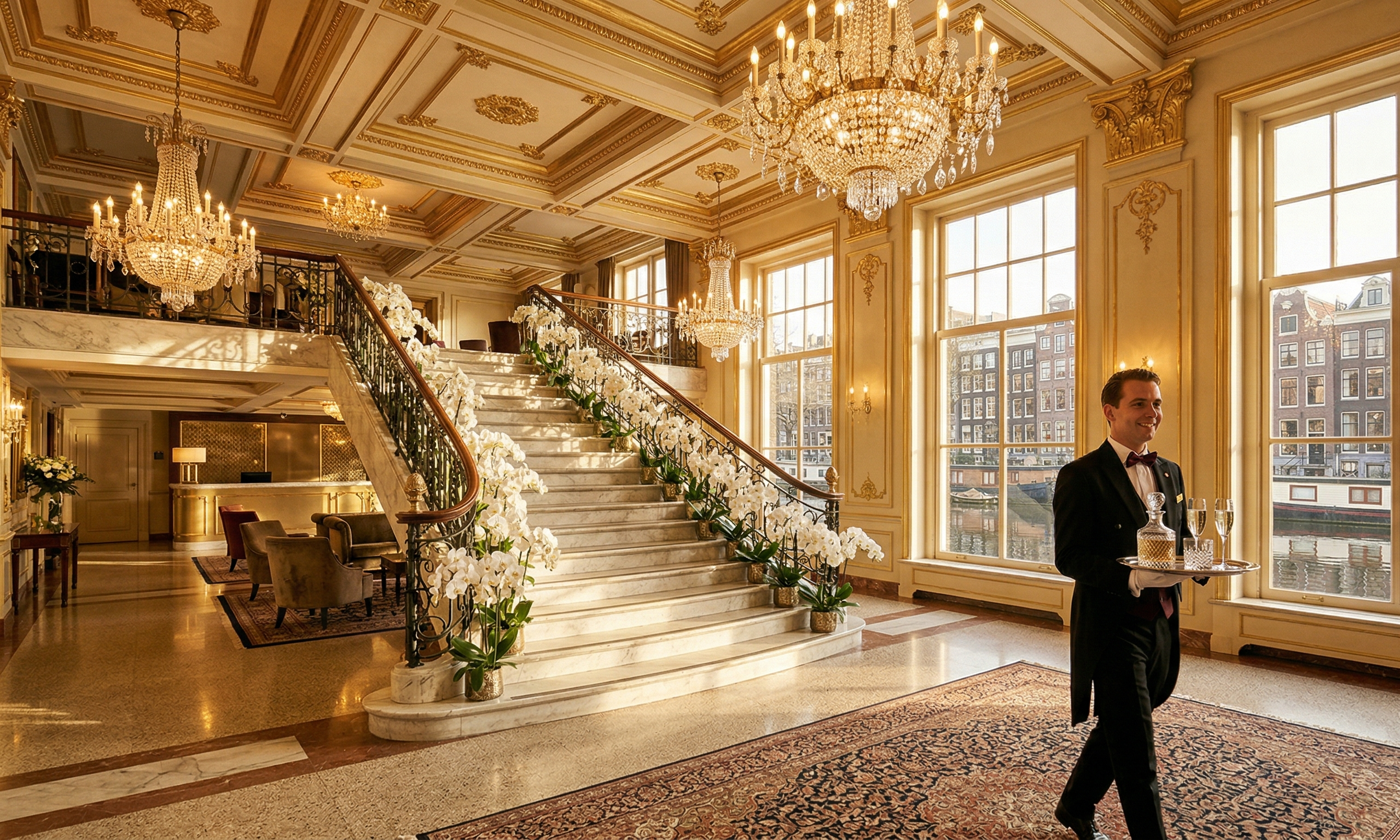
Europe’s grand hotels represent the highest expression of luxury hospitality — not because of gilded ceilings, ballrooms, or the theatrical scale of palatial suites, but because they carry within their walls a specific history and culture that no new-build can manufacture. The Waldorf Astoria Amsterdam is the finest example — a masterpiece set along the city’s historic canals, where meticulously restored 17th-century palaces are paired with understated contemporary elegance and polished service of a kind that makes guests feel genuinely seen. These corridors hum with the energy of the Dutch Golden Age — Rembrandt, Van Gogh, UNESCO-protected Amsterdam canals — while delivering white-glove precision and butler service that the most demanding elite traveler expects without question.
The Bürgenstock Resort above Lake Lucerne represents the other pole of European luxury — the overwhelming power of Alpine scenery paired with world-class wellness, dining, and a mountain backdrop that operates as its own form of therapy. Belle Époque traditions — afternoon tea, resident sommelier, concierge, and private terraces with lake views — are present throughout, elevated by a contemporary vision that feels neither stiff nor reverential. Across Switzerland, from Zurich and Geneva to the Rhine Falls, and through Amsterdam’s Golden Age streets, Europe remains unmatched in weaving history, culture, highly personalized service, and luxury into a seamless, deeply immersive experience — one that consistently stands the test of time.
Zimbabwe Safari
Zimbabwe is the safari destination that serious wildlife travelers whisper about — a country of magnificent wilderness, spectacular Victoria Falls, and intimate, high-end safari lodges that rival the best in Africa without the overcrowding of more fashionable circuits. Hwange National Park — the country’s largest game reserve — is home to more than 100 mammal species: lion, leopard, rhino, African wild dogs, pangolin, sable antelope, kudu, hippo, crocodile, and one of Africa’s largest elephant populations, revealed across semi-desert scrub, mopane woodlands, and granite hills bordering the Kalahari through day and night game drives that consistently deliver. Birds including the fish eagle and martial eagle complete the extraordinary wildlife tapestry.
Mana Pools National Park — a UNESCO World Heritage Site since 1984 — sits along the mighty Zambezi River in northern Zimbabwe, offering one of Africa’s finest walking safaris, made possible by an exceptionally rigorous professional guide licensing system ensuring safety among dangerous game. Combining Hwange with Mana Pools creates rare completeness — from Victoria Falls and Devil’s Pool to mokoro canoe trips, white-water rafting, gorge swings, bungee jumps, village visits, and cultural exchange supported by CAMPFIRE community programs and conservation fees. Mobile tented camps and permanent lodges deliver high-end comfort against pure, unscripted African wilderness — an off-the-beaten-path choice that rewards courage and curiosity in equal measure.
Palau — Off the Beaten Path
Palau is the destination that recalibrates your entire understanding of what luxury travel is actually for — a remote Pacific nation in Micronesia where untouched marine environments, vibrant coral reefs, and dramatic limestone islands rising from turquoise lagoons create some of the most pristine seascapes on the planet. The Jellyfish Lake, legendary Blue Corner dive site, WWII wrecks at Peleliu and Bloody Nose Ridge, manta rays, sharks, Napoleon wrasse, giant clams, dugongs, and sea turtles inhabiting a no-take zone marine sanctuary exist nowhere else with this degree of conservation integrity. Palau’s famous Palau Pledge — signed by every visitor upon entry — reflects a national commitment to eco-conscious travel, reef-safe behavior, and low-impact interaction with fragile ecosystems.
Staying with Four Seasons Explorer Palau means guided diving, snorkeling, night dives, macro photography, underwater caves, drift diving, and remote island excursions — all delivered with ultra-luxury service and genuine expedition-style exploration. Bioluminescence at midnight, traditional Palauan culture through the bai meeting house, storyboard art, taro patches, and clam gardens tended by ocean-connected communities add irreplaceable depth. Liveaboard dive boats carry the adventurous into deeper biosphere reserve waters under UNESCO protections, proving that meaningful sustainability and absolute comfort need never conflict — and that Palau is increasingly essential in shaping the purposeful, thoughtful, educational future of high-end travel across the Pacific Ocean.
Galapagos Islands & Ecuador
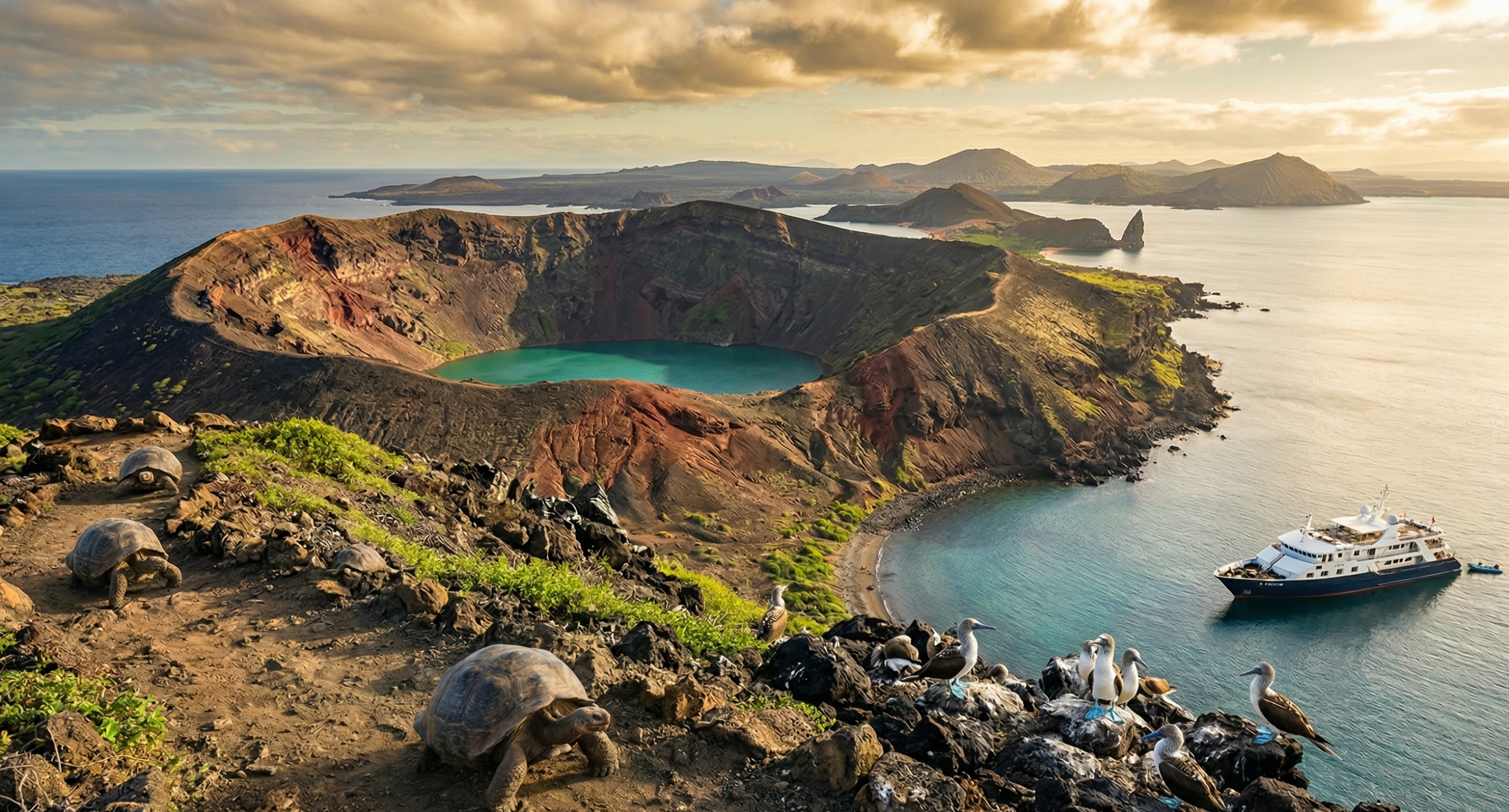
The Galapagos Islands — a living museum and showcase of evolution — sit in the Pacific Ocean some 1,000 km (600 miles) from the Ecuadorian coast, shaped by the confluence of three ocean currents into one of the richest marine ecosystems in the world. Ongoing seismic and volcanic activity across Santa Cruz Island, Isabela Island, Española, and Fernandina mirrors the geological processes that produced marine iguanas, flightless cormorants, giant tortoises, huge cacti, endemic trees, mockingbirds, and finches whose variation inspired Charles Darwin’s theory of evolution by natural selection in 1835. The Charles Darwin Research Station continues protecting endemic species through conservation, biodiversity science, and naturalist-guided responsible wildlife watching.
A luxury Galapagos experience in 2026 unfolds across the intimate Finch Bay hotel and the private yacht La Pinta — guided diving, snorkeling, kayaking, glass-bottom boats, hiking across volcanic craters and lava fields, and encounters with blue-footed boobies, frigatebirds, albatrosses, lava lizards, sea lions, and penguins managed by expert ranger and naturalist guides. Quito’s historic Casa Gangotena Hotel and the cloud forest’s extraordinary Mashpi Lodge — Ecuador’s most exclusive hotel and a true biodiversity hotspot — complete a journey where luxury and nature exist in perfect, unhurried conversation from the Andes to the archipelago and back.
Luxury Travel Trends for 2026
The World Luxury Chamber of Commerce (WLCC) has identified six defining forces reshaping luxury travel in 2026. The first and most pervasive is experience-led travel driven by emotional connection: UNHWIs and ultra-high-net-worth individuals prioritizing meaning over materialism, seeking emotional impact, cultural resonance, authenticity, and a powerful sense of place — where inter-personal connection defines indulgence more than any amenity. Alongside this, holistic wellness and intentional restoration have become the central motivator of travel — medical wellness retreats, mindfulness programs, spa retreats, medical-wellness vacations, mental health escapes, and purpose-driven journeys toward physical restoration and long-term wellbeing are now expected rather than exceptional. Bob Kharazmi of Global Hotel Advisors LLC points to private air travel, Ritz-Carlton’s three superyachts, and Four Seasons’ private branded jets as evidence that the journey itself has become a luxury destination.
The third trend — safety-led solo female travel — sees Neen James of the WLCC Board describing a surge in women seeking Intentional Restoration: wellness-focused experiences combining absolute safety, complete freedom, attentive service, and respectful distance, transforming solo travel into a liberating, legacy-defining experience through strategic room placement, curated wellness, and trusted local connections. Fourth, private membership clubs redefine exclusive access — bespoke, hyper-personalized itineraries granting entry to exotic adventures, private resorts, and coveted global private events, as Kassie Smith of KS Global confirms. Fifth, neo-nomad living — championed by Alexander Chetchikov, President of the WLCC — positions mobile residences, private aviation, and yachts as vehicles of mobility-as-privilege, carrying global leaders in impeccably tailored comfort within a personal sanctuary of freedom of movement. Finally, cultural immersion and gastronomic exploration close the picture — with Saudi Arabia, Riyadh, and the GCC leading next-generation luxury through destination restaurants like Ziba and Sold Out, and Ras Al Khaimah’s landmark hotel pipeline — Anantara, Sofitel, SO/, Wynn Marjan Island — where unspoiled landscapes, generous space, and authentic sense of place define the ultimate currency of intention, access, wellbeing, and emotional resonance in travel.